

Bringing 5S To Your Material Handling Company

August 12, 2011

The scenario – your warehouse or manufacturing storage area is a cluttered mess. Because one person doesn’t have ownership of the area, it has become a dumping ground for any materials that aren’t immediately needed. It is near impossible to locate specific items and even worse, the stacking of boxes has created a safety hazard for employees entering the area.

Tackling the project of organizing the storage area is overwhelming, but gathering a team to break up the steps will ease some of the tension. Members of the team should be selected based on their involvement with the items found in the storage area. For example, if office supplies are stored, the employee responsible for ordering and/or distributing them should be on the team.

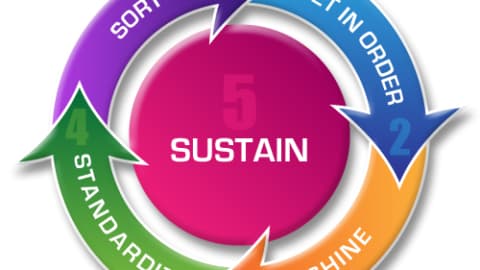
Before the team touches any boxes, lead them through a walk-around of the area, asking them to note problems. Take pictures of the area’s current state. Encourage the team to set goals such as saving time to locate items. Finally, explain 5S by defining each step. The 5S Philosophy will assist your team with initial clean-up efforts, ending results and plans for sustainability.

Sort
Have your team classify the types of items in the area. What belongs in the space versus what needs to be relocated? Should something be immediately trashed or noted for discard if not used by a certain date? Can items be repurposed or donated?

Set In Order
Determine which items are used most often and give them a prime location that allows easy access to employees entering the area. Group similar items together or create space for your various departments in the company. Mark off a specific spot for every item and then label that space. The placeholder will ensure the team doesn’t put an incorrect item in place or knows when something missing.

Shine
Once the team has agreed on what belongs in the area and makes its placeholder, it is time to clean. Look for potential safety hazards and hard to read labeling. Consider using storage bins for smaller items to prevent loss. Keeping a clean area helps employees spot problems quicker and instills a sense of pride.

Standardize
For every item with a placeholder, develop its standard. Does it have a maximum or minimum total? Should it be on a maintenance schedule? Is there a best practice that should be put into place? Place the standards in a highly visible location so employees entering the area are aware of the expectations.

Sustain
The hardest part of the task is flipping the thought of “project” to “every day.” The team worked hard to clean up the storage area and should not be expected to do it 3 months later. Are the standards reasonable? Who will be responsible for looking over the area and how often? If an item is out of place, who will be responsible to correct it?

Like anything new, beginning a 5S project has good intentions but can lose steam due to the time it takes to complete it. Bring success to your project by designating a particular day and time of the week for the team to meet. Work in shorter bursts of time to keep energy up and allow team members to return to their other responsibilities.

At the conclusion of the project, ask the team to revisit the goals they mentioned prior to starting. Were the goals met? Will time and/or money be saved? Will product be kept free from damage? Display pictures of before and after, reminding your team and other employees of the efforts made.

5S articles spotted on the web:

The 5S Philosophy – presentation by TPM Online.com

The 5S Philosophy – presentation by Add Value Consulting Inc.